
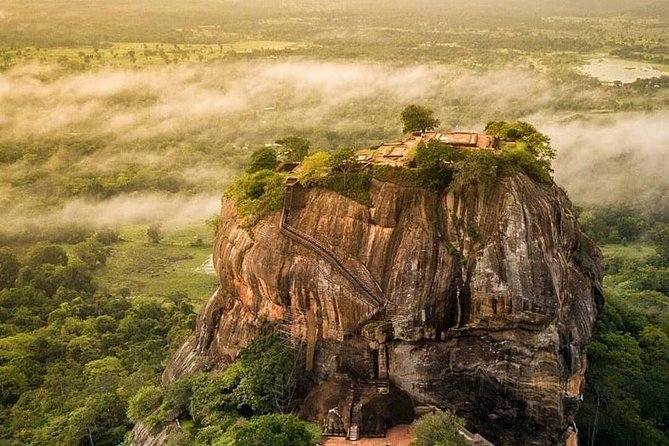
Sigiriya and Dambulla are two of Sri Lanka’s most iconic historical and cultural sites, both recognized as UNESCO World Heritage Sites. They are located in the central part of the country and offer visitors a glimpse into the island’s rich heritage and ancient architecture.
Sigiriya (Lion Rock)
Overview
- Location: Central Province, near the town of Dambulla.
- Historical Significance: Sigiriya, also known as Lion Rock, is an ancient rock fortress and palace built by King Kashyapa in the 5th century CE. It served as the king’s capital and fortress.
Key Attractions
- Lion’s Gate: The entrance to the palace complex, flanked by enormous lion paws carved into the rock.
- Frescoes: The famous Sigiriya frescoes, also known as the “Sigiriya Damsels,” are paintings of celestial maidens located in a sheltered gallery along the rock face.
- Mirror Wall: A highly polished wall covered with ancient graffiti and inscriptions by visitors from centuries past.
- Summit: The flat summit of the rock houses the ruins of King Kashyapa’s palace, offering breathtaking panoramic views of the surrounding countryside.
- Water Gardens: An intricate system of gardens, pools, and fountains at the base of the rock, showcasing advanced hydraulic engineering.
Visiting Tips
- Best Time to Visit: Early morning or late afternoon to avoid the midday heat.
- Climbing: The ascent involves about 1,200 steps. Wear comfortable shoes and bring water.
- Guided Tours: Consider hiring a guide to gain deeper insights into the history and significance of the site.
Dambulla Cave Temple
Overview
- Location: Just a short drive from Sigiriya, in the town of Dambulla.
- Historical Significance: The Dambulla Cave Temple, also known as the Golden Temple of Dambulla, is a complex of five caves with over 150 statues and paintings of Buddha and other deities. The site dates back to the 1st century BCE.
Key Attractions
- Cave Temples:
- Devaraja Viharaya: The first cave, featuring a 14-meter-long reclining Buddha statue.
- Maharaja Viharaya: The second cave, the largest and most impressive, containing numerous Buddha statues and vibrant murals.
- Maha Alut Viharaya: The third cave, known for its wall paintings and a large Buddha statue.
- Pachima Viharaya: The fourth cave, with a smaller collection of statues and paintings.
- Devana Alut Viharaya: The fifth cave, housing newer statues and artwork.
- Golden Buddha Statue: A large golden Buddha statue at the base of the temple complex, visible from afar.
Visiting Tips
- Dress Code: Modest attire is required. Shoulders and knees should be covered.
- Footwear: You must remove your shoes before entering the temple complex.
- Best Time to Visit: Morning or late afternoon to avoid the heat and crowds.
Nearby Attractions
- Pidurangala Rock: Located near Sigiriya, this lesser-known rock offers a challenging climb and spectacular views of Sigiriya Rock.
- Minneriya National Park: A short drive from Dambulla, this park is famous for the “Gathering,” a seasonal event where hundreds of elephants congregate around the Minneriya Tank.
Accommodation
- Range: There are various accommodation options ranging from budget guesthouses to luxury resorts in and around Sigiriya and Dambulla.
- Popular Choices: Jetwing Vil Uyana, Heritance Kandalama, and Sigiriya Village Hotel.
Dining
- Local Cuisine: Enjoy traditional Sri Lankan dishes at local restaurants and hotels.
- International Options: Many hotels and resorts offer a mix of international and local cuisine.
Sigiriya and Dambulla offer a rich blend of history, culture, and natural beauty, making them essential stops on any Sri Lankan itinerary.
